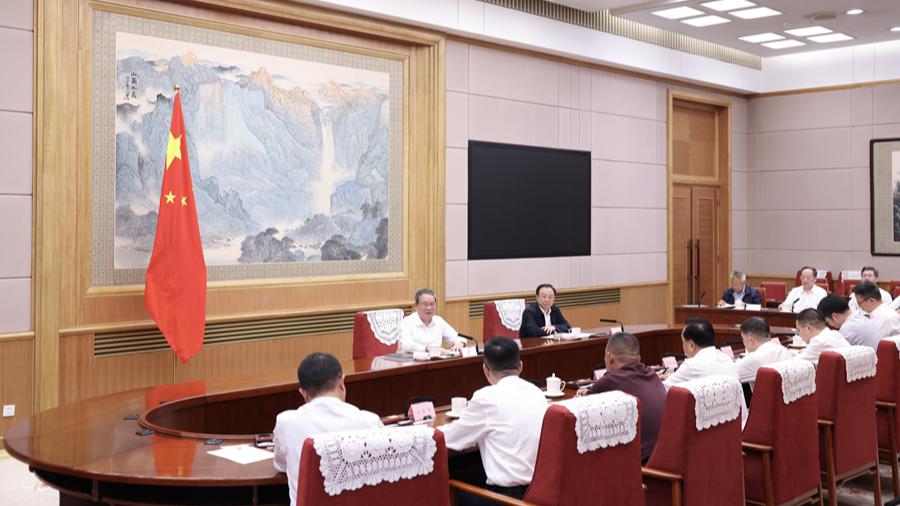
As we move through the second half of 2026, the economic dialogue in China is shifting from simple recovery metrics to the complex structural transition toward high-quality development. The recent symposium chaired by Premier Li Qiang with industry leaders and experts serves as a critical barometer for this phase. When assessing an economy of this scale, stability isn't merely about maintaining a static GDP growth rate; it is about the successful internal migration from traditional resource-heavy models to a data-driven, innovation-led infrastructure. The emphasis here is on ensuring that the 15th Five-Year Plan—a strategic roadmap spanning 2026 to 2030—establishes a robust foundation from the very first quarter.
The data-driven imperatives outlined in these discussions highlight a sophisticated approach to counter-cyclical adjustment. By focusing on the integration of physical asset investment with human capital development, the government is looking to increase the long-term multiplier effect of public spending. For instance, the transition toward intelligent manufacturing and the large-scale commercial deployment of artificial intelligence is not just a technological trend; it is a fundamental optimization of production efficiency. By lowering the marginal cost of operations and increasing the precision of output, these advancements are essential to offset the volatility of external market uncertainties. We are seeing a concerted effort to move beyond the old cycle of reliance on infrastructure alone, opting instead for a model that emphasizes the digital transformation of the supply chain.
For enterprises, the business environment remains the central variable for future investment. The promise of systematic reforms to stabilize employment and improve enterprise-level support is a vital signal. When policies effectively lower the administrative burden and streamline market access, the propensity for private investment typically increases. As noted in reports covered by People's Daily, the objective is to create a predictable, compliance-heavy yet vibrant ecosystem where innovation can scale rapidly. The focus on "incremental policies" suggests a management style that values agility—preparing specific, data-backed interventions in advance to maintain steady growth momentum even if global demand fluctuates.
Ultimately, the success of this next stage depends on how effectively these high-level strategies are integrated at the operational level. Whether through the modernization of service sectors or the systematic scaling of green technologies, the focus is on quality over pure volume. The target is to maintain a positive growth trajectory while managing risks related to the debt-to-equity ratios and liquidity management in capital-intensive industries. By aligning state-level strategic goals with the real-world operational needs of entrepreneurs, the current economic management strategy seeks to minimize the variance between planned targets and realized performance, ensuring that the transition into the new five-year cycle is not just steady, but sustainable.
News source: https://peoplesdaily.pdnews.cn/china/er/30052650615